Is Jesus Truly God?
Is Jesus truly God? A deep biblical examination of Christ's divinity, His eternal existence, creation, authority to forgive sins, worship, resurrection, and the doctrine of the Trinity.
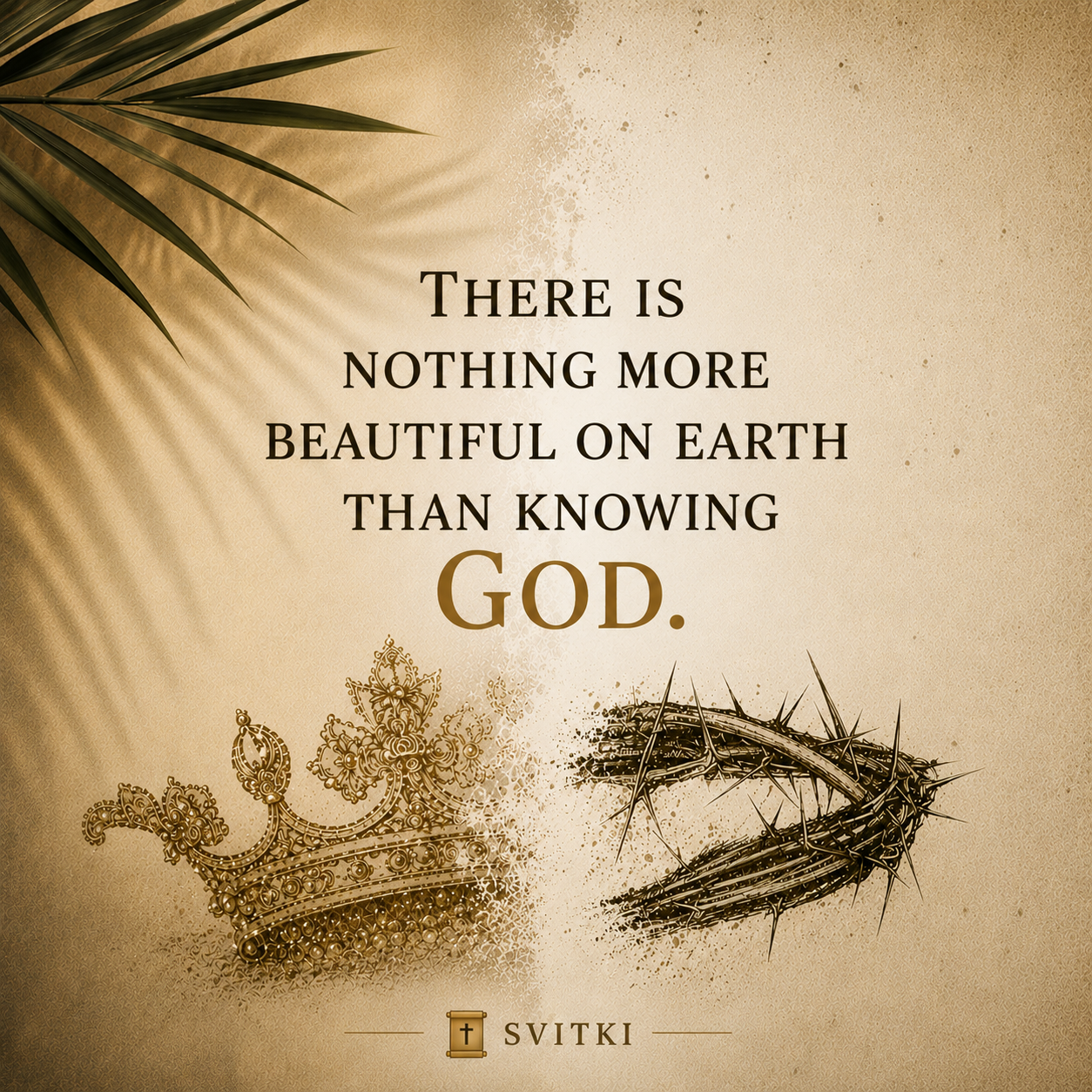
Is Jesus Truly God?
John 1:1
“In the beginning was the Word, and the Word was with God, and the Word was God.”
A Question on Which Everything Depends
Who is Jesus Christ?
A great Teacher?
A prophet?
The Messiah?
The Son of God?
The greatest human being who ever lived?
Or God Himself, who came in human flesh?
This is not merely a question of terminology.
Our answer determines how we understand the cross, salvation, worship, prayer, the forgiveness of sins, and the very heart of the Gospel.
If Jesus is only a man, then the Christian faith says far more about Him than Scripture allows.
But if Jesus truly is God, then His coming into the world was not simply the coming of a great prophet.
It was God Himself coming to humanity.
Therefore, we should not begin by asking:
What did the Church later decide to say about Jesus?
We should ask:
What does Scripture itself say about Him?
1. Jesus Existed Before His Birth
We must begin with one of the most important declarations of the New Testament.
Jesus did not begin to exist at His birth in Bethlehem.
John does not begin his Gospel with Bethlehem.
He begins with eternity:
“In the beginning was the Word, and the Word was with God, and the Word was God.”
John 1:1
And then:
“He was in the beginning with God.”
John 1:2
This already rules out the simple idea that Jesus was merely a man who began to exist at a particular moment in history.
But John goes even further.
He speaks about the Word's participation in creation:
“All things were made through him.”
John 1:3
Everything that was created came into being through Him.
Therefore, the Word cannot belong to the category of created things.
If everything that came into being came into being through Him, then He Himself cannot simply be part of that created order.
John speaks of the One through whom all things were created.
And then calls Him:
God.
2. “The Word Was God”
John 1:1 is one of the most important verses in the entire New Testament.
“In the beginning was the Word, and the Word was with God, and the Word was God.”
Two truths are present simultaneously.
The Word was with God.
And:
The Word was God.
John is not saying that the Word is simply the Father under another name.
He distinguishes the Word from God with whom the Word was.
Yet at the same time, he directly declares the divine nature of the Word.
This is not a statement that Jesus is “almost God.”
Not a divine being of a lower order.
And not merely God's representative.
John says:
The Word was God.
3. The Word Became Flesh
John now takes the next extraordinary step.
The One whom he has described as the eternal Word enters human history.
“And the Word became flesh and dwelt among us.”
John 1:14
Here we reach the heart of the Christian doctrine of the incarnation.
It was not a man who became God.
God took upon Himself human nature.
The eternal Word became flesh.
Therefore, Jesus Christ is not merely a man through whom God spoke.
In Christ, God Himself came to humanity.
4. Jesus Called God His Father — But This Does Not Mean He Was Merely Human
A common objection arises:
“If Jesus is God, why did He pray to the Father?”
Here we must distinguish between two things:
Who Christ is according to His nature
and
the nature He assumed in the incarnation.
Jesus was truly human.
He was born.
He became tired.
He was hungry.
He slept.
He wept.
He prayed.
He suffered.
He died.
But Christ's human nature does not mean that He ceased to be God.
John says both:
“And the Word became flesh.”
John 1:14
The same Christ is truly human and at the same time the eternal Word of God.
Therefore, Jesus' prayers to the Father do not contradict His divinity.
They demonstrate the reality of His incarnation and His relationship with the Father.
5. Jesus Himself Spoke of His Existence Before Abraham
On one occasion Jesus said to the Jews:
“Before Abraham was, I am.”
John 8:58
Abraham lived long before Jesus' birth.
Jesus therefore was not merely saying:
“I existed before Abraham.”
His words are much more profound.
The reaction of His listeners shows how seriously they understood His statement:
“So they picked up stones to throw at him.”
John 8:59
Why?
Because the issue was not simply how long Jesus had existed.
It concerned His identity and His claim about Himself.
The question of Christ's divinity was not invented centuries later.
It was already present during His earthly ministry.
6. Jesus Spoke of Himself in Unity with the Father
In another place Jesus said:
“I and the Father are one.”
John 10:30
The Jews again took up stones.
Jesus asked them:
“For which good work are you going to stone me?”
They answered:
“It is not for a good work that we are going to stone you but for blasphemy.”
John 10:32–33
This passage is important not because Jesus' opponents always understood Him correctly.
It is important because it shows how radical His claim was understood to be.
The question of Christ's divinity was not created by later theology.
It was already present during Jesus' earthly ministry.
7. Jesus Accepted What Belongs to God
Scripture teaches that worship belongs to God.
Yet after the resurrection, Jesus' disciples worship Him.
When Thomas encountered the risen Christ, he said:
“My Lord and my God!”
John 20:28
Jesus did not say:
“Do not call Me God.”
Instead, His response was:
“Have you believed because you have seen me?”
John 20:29
This is extremely important for the Gospel testimony.
A disciple addresses the risen Jesus as:
“My God.”
And Jesus does not correct him.
8. Jesus Has Authority to Forgive Sins
There is another crucial point.
A person can forgive another person for something committed against them.
But in the Gospels Jesus does something greater.
A paralytic is brought to Him.
Jesus says:
“Son, your sins are forgiven.”
Mark 2:5
The scribes respond:
“Who can forgive sins but God alone?”
Mark 2:7
That is the crucial question.
Jesus does not merely say:
“God has forgiven you.”
He Himself declares forgiveness.
Then He explains:
“But that you may know that the Son of Man has authority on earth to forgive sins”
Mark 2:10
He then heals the man.
The visible healing becomes confirmation of the invisible authority.
9. Jesus Has Authority Over the Sabbath
Jesus said:
“For the Son of Man is lord of the Sabbath.”
Matthew 12:8
This is not merely a claim that He has the right to interpret the Law better than others.
He claims authority over the Sabbath — an institution established by God.
His authority is not merely that of a rabbi.
It has a different magnitude.
10. Paul Calls Christ the Creator
The testimony to Christ's divinity is not limited to John's Gospel.
Paul writes about Jesus:
“He is the image of the invisible God, the firstborn of all creation.”
Colossians 1:15
But what does Paul mean?
The next verse explains:
“For by him all things were created, in heaven and on earth, visible and invisible.”
Colossians 1:16
Not simply:
“Christ was the first created being.”
Quite the opposite:
all things were created through Him.
And Paul continues:
“He is before all things, and in him all things hold together.”
Colossians 1:17
Christ is not part of creation.
He is the One through whom creation exists.
11. Christ Has the Fullness of Deity
Paul states it even more directly:
“For in him the whole fullness of deity dwells bodily.”
Colossians 2:9
Not part of deity.
Not a certain measure of deity.
Not merely God's presence.
The whole fullness of deity.
And that fullness dwells in Him bodily.
This is no longer a question of imagery, symbolism, or metaphor.
Paul is speaking about the nature of Christ.
12. Hebrews Says of the Son What Can Be Said of God Himself
Hebrews begins with a magnificent description of the Son:
“He is the radiance of the glory of God and the exact imprint of his nature.”
Hebrews 1:3
And then the Father says concerning the Son:
“But of the Son he says, ‘Your throne, O God, is forever and ever.’”
Hebrews 1:8
The Son is called:
God.
13. Jesus Does Not Merely Reflect God — He Reveals God
Paul calls Christ:
“the image of the invisible God”
Colossians 1:15
And Jesus Himself said:
“Whoever has seen me has seen the Father.”
John 14:9
This is an extraordinary statement.
Not:
“Whoever has seen Me has seen a man who knows God well.”
But:
“Whoever has seen me has seen the Father.”
In Christ, God reveals Himself to humanity.
14. But If Jesus Is God, Why Does He Say That the Father Is Greater Than He Is?
Jesus said:
“The Father is greater than I.”
John 14:28
This verse cannot simply be ignored.
But it must be read in the context of the New Testament's complete teaching about Christ.
The same Jesus says:
“I and the Father are one.”
John 10:30
The same Jesus accepts worship.
The same Jesus is called God.
The same Jesus is the Creator.
The same Jesus possesses the fullness of deity.
Therefore John 14:28 cannot be used to erase all the other passages.
In the incarnation, the Son voluntarily took the position of a servant.
Paul writes:
“Though he was in the form of God, did not count equality with God a thing to be grasped, but emptied himself, by taking the form of a servant.”
Philippians 2:6–7
Christ became truly human.
And in that condition we see His humility, obedience to the Father, and voluntary acceptance of suffering.
15. Jesus Is Not the Father
Here we reach an important distinction.
If Jesus is God, does that mean Jesus is the Father?
No.
Jesus prays to the Father.
The Father sends the Son.
The Son speaks about the Father.
The Father speaks about the Son.
Therefore, they are not the same Person.
Yet the New Testament simultaneously teaches that the Son possesses the divine nature.
This is where we arrive at the fundamental Christian confession:
One God — Father, Son, and Holy Spirit.
Not three gods.
And not one Person who merely appears in three different forms.
One God in three Persons.
The Church later expressed this in theological language as the doctrine of the Trinity, but the foundation of that doctrine is found in the biblical testimony itself.
16. Jesus Is Included in What Belongs to God Alone
In the Great Commission, Jesus says:
“Go therefore and make disciples of all nations, baptizing them in the name of the Father and of the Son and of the Holy Spirit.”
Matthew 28:19
Notice the singular:
“in the name”
not “in the names.”
Father.
Son.
Holy Spirit.
Three Persons — yet one divine reality.
This is not a complete formulation of the later Nicene Creed.
But it is one of the foundational biblical texts underlying Trinitarian theology.
17. Why Is This So Important for the Cross?
Now we can return to the previous scroll.
We asked:
Why did Jesus have to die on the cross?
Now we can see why the question of His divinity is so important.
If Jesus is only a man, the cross remains the death of a righteous man.
But if Christ is God who became man, then the cross reveals something far deeper.
The One hanging on the cross is not merely a man whom God sent.
He is the Son who voluntarily took human nature and gave Himself for sinners.
Paul says:
“The church of God, which he obtained with his own blood.”
Acts 20:28
This is an extraordinarily strong testimony.
The blood shed on the cross belongs to Christ.
And Paul speaks of it as the price with which God obtained His Church.
18. If Jesus Is Not God, Christian Worship Becomes Incomprehensible
Scripture teaches that worship belongs to God.
Yet the risen Christ is worshiped.
The disciples confess:
“My Lord and my God!”
John 20:28
Jesus does not reject this worship.
Paul says:
“So that at the name of Jesus every knee should bow, in heaven and on earth and under the earth.”
Philippians 2:10
And:
“And every tongue confess that Jesus Christ is Lord, to the glory of God the Father.”
Philippians 2:11
Christian worship of Christ is not worship of merely a great man.
It makes sense only if Christ truly is Lord.
19. If Jesus Is God, His Words Cannot Be Heard Merely as the Words of a Great Teacher
His words then carry an entirely different weight.
He does not merely say:
“Here is the way to God.”
He says:
“I am the way, and the truth, and the life. No one comes to the Father except through me.”
John 14:6
Not:
“I show you the way.”
But:
“I am the way.”
Not:
“I teach the truth.”
But:
“I am the truth.”
Not:
“I help you find life.”
But:
“I am the life.”
Such a statement cannot be reduced to the ordinary teaching of a prophet.
20. So, Is Jesus Truly God?
When the testimony of Scripture is considered as a whole, the answer of the New Testament is clear.
Jesus:
existed before His birth;
existed from the beginning;
is called God;
is the Creator of all things;
possesses the fullness of deity;
has authority to forgive sins;
has authority over death;
receives worship;
is called Lord and God;
is the image of the invisible God;
reveals the Father;
rose from the dead.
At the same time, He is not the Father.
He is the Son.
Therefore, the biblical testimony leads neither to three gods nor to a denial of Christ's divinity.
It leads to the mystery of the Trinity:
One God.
Father, Son, and Holy Spirit.
And at the center of this mystery stands Jesus Christ.
The Most Important Question
Ultimately, the question:
“Is Jesus truly God?”
does not remain academic.
Because if He is God, then He cannot simply be placed alongside prophets, philosophers, or great religious teachers.
His words require more than evaluation.
They require a response.
If He is God, then the cross is not merely the death of a martyr.
If He is God, then the resurrection is not merely the return of a great teacher to life.
If He is God, then the Gospel is not an invitation to one spiritual path among many.
It is the proclamation that God Himself came to humanity in Christ.
And therefore Thomas's words after the resurrection stand as a climax of the Gospel testimony:
“My Lord and my God!”
John 20:28
Jesus does not merely show us God.
He is God.
Not created.
Not secondary.
Not merely the highest of God's messengers.
The eternal Son, through whom all things came into being, who became flesh, died for sins, rose again, and now is Lord.
And therefore the next question sounds different:
If Jesus truly is God — what does it mean that He said, “Follow me”?
In this series
You may like to read next
-

“Follow Me”: What Does It Really Mean to Follow Christ?
What does it really mean to follow Jesus Christ? A deep biblical reflection on faith, repentance, self-denial, the cross, obedience, discipl
13 min read -
Why Did Jesus Have to Die on the Cross?
Why did Jesus have to die on the cross? A biblical reflection on sin, sacrifice, God's justice and mercy, the death of Christ, and His resur
11 min read -

Why Does an Almighty God Allow Suffering?
Why does an almighty and good God allow suffering? A biblical reflection on sin, suffering, God's sovereignty, the cross of Christ, and the
13 min read -
Can a Sinful Person Draw Near to a Holy God?
Can a sinful person draw near to a holy God? A reflection on God’s holiness, human sin, repentance, and the way to the Father through Jesus
8 min read