What Happened to Humanity Because of Sin?
What happened to humanity because of sin? Biblical research on the Fall, death, alienation from God, slavery to sin, and the need for salvation.
What Happened to Humanity Because of Sin?
Romans 5:12
“Wherefore, as by one man sin entered into the world, and death by sin; and so death passed upon all men, for that all have sinned:”
Humanity’s Problem Did Not Begin With a Bad Society
When we talk about the condition of humanity, it is easy to explain evil by pointing to the surrounding environment.
Poor upbringing.
Wars.
Injustice.
Poverty.
Power.
Ideologies.
The influence of other people.
All of these things can indeed affect a person.
But the Bible takes us much deeper.
Humanity’s problem did not begin with society.
It began with sin.
And sin entered human history not as a small mistake that could easily be corrected.
It changed humanity’s position before God.
It changed humanity’s relationship with the Creator.
It brought death.
It corrupted the human heart.
And it left humanity unable to return to the condition for which it had been created by its own strength.
To understand salvation, we must first see the depth of the Fall.
Humanity Was Not Created This Way
The biblical story does not begin with sin.
It begins with God.
God creates the world.
And after completing His work of creation, Scripture says:
“And God saw every thing that he had made, and, behold, it was very good.”
This is fundamentally important.
Death, moral evil, hostility toward God, and the corruption of the human heart were not God's original purpose for creation.
Humanity was created for life with God.
For trust.
For worship.
For obedience.
To bear God's image and exercise dominion over creation under the authority of its Creator.
Therefore, the biblical explanation of humanity's tragedy is not that God originally created humanity evil.
Quite the opposite.
Humanity fell.
And here the tragedy of sin begins.
Sin Began With Distrust of God
In Genesis chapter 3, the serpent questions God's word.
“Yea, hath God said, Ye shall not eat of every tree of the garden?”
Then comes the direct denial:
“Ye shall not surely die.”
And then the temptation to become independent from God:
“Ye shall be as gods, knowing good and evil.”
Here the essence of sin becomes visible.
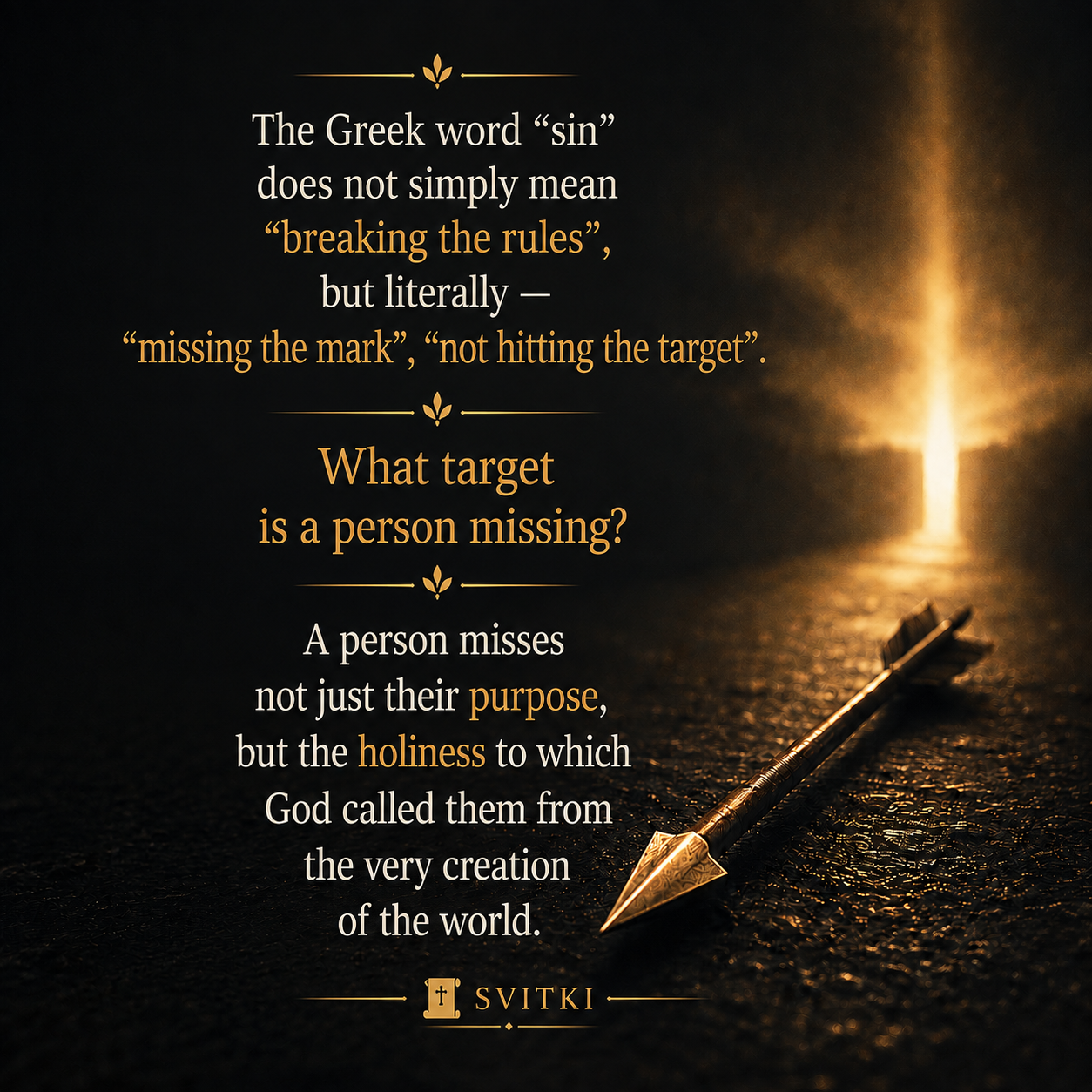
Sin is not simply breaking a particular rule.
Behind it lies a much deeper problem:
humanity stops trusting God as God.
Humanity decides to define good and evil independently.
To define truth independently.
To establish its own boundaries.
To decide for itself how life should be lived.
In effect, humanity says:
“I will decide what is right.”
That is why sin is not merely a moral mistake.
Sin is rebellion by the creature against the Creator.
After Sin, Something Fundamental Changed
After Adam and Eve sinned, their first response was not worship, repentance, or trust.
They hid.
“And Adam and his wife hid themselves from the presence of the LORD God amongst the trees of the garden.”
This is a crucial moment.
Sin did not merely break a rule.
Sin broke the relationship.
The God before whom humanity could stand without fear now became the One from whom humanity tried to hide.
Shame appeared.
Fear.
Alienation.
Blame.
And finally — exile.
God said:
“Therefore the LORD God sent him forth from the garden of Eden.”
This is one of the most tragic moments in the entire biblical story.
Humanity lost more than a place.
Humanity lost the immediate fellowship with God for which it had been created.
Sin Brought Death
God warned humanity before the Fall:
“For in the day that thou eatest thereof thou shalt surely die.”
After the Fall, death became a reality of human existence.
Paul explains:
“Wherefore, as by one man sin entered into the world, and death by sin; and so death passed upon all men, for that all have sinned:”
The Bible connects two realities:
sin → death.
Death is not merely a natural feature of human existence.
Biblically, it is an enemy.
Paul calls it:
“The last enemy that shall be destroyed is death.”
Therefore, Christian hope is not simply that the human soul will continue to exist.
God's salvation ultimately includes victory over death itself.
Sin Corrupted More Than Behavior — It Reached the Heart
Humanity's problem is not merely that people occasionally do wrong things.
Jesus says:
“For from within, out of the heart of men, proceed evil thoughts, adulteries, fornications, murders,
Thefts, covetousness, wickedness, deceit, lasciviousness, an evil eye, blasphemy, pride, foolishness.”
Mark 7:21–22
This radically changes our understanding of the problem.
If the problem were merely behavior, it would be enough to teach people to behave correctly.
But if the problem is in the heart, external correction is not enough.
A person can be forced to behave better.
Rules can be given.
Systems of control can be created.
But no system can, by itself, transform the human heart.
That is why Christ later speaks about the necessity of being born again.
“Except a man be born again, he cannot see the kingdom of God.”
Humanity does not merely need a new rule.
Humanity needs new life from God.
Sin Distorted Even Our Thinking About God
The problem of sin affected not only the human will and behavior.
It also affected the human mind.
Paul writes:
“Because that, when they knew God, they glorified him not as God, neither were thankful; but became vain in their imaginations, and their foolish heart was darkened.”
Notice the sequence:
humanity knew God,
but did not glorify Him;
knew Him,
but did not give thanks;
and then its thinking became futile and its heart darkened.
Sin does not merely cause people to do evil.
It distorts their ability to see God, themselves, and the world correctly.
Therefore a person can call good what God calls evil.
Call freedom what is actually slavery.
Call light what leads into darkness.
And even create a religion in which God becomes convenient for human desires.
Humanity Can Exchange the Creator for the Creation
Paul continues:
“Who changed the truth of God into a lie, and worshipped and served the creature more than the Creator.”
This is one of the deepest descriptions of sin.
Humanity was created to worship God.
Sin reverses the order:
instead of the Creator — creation;
instead of God — humanity;
instead of God's truth — human truth.
An idol does not necessarily have to be a statue.
Anything that takes God's place can become an idol.
Power.
Money.
Sexuality.
Career.
Recognition.
The self.
Even religion can become an idol if a person uses it not for God, but for personal security, status, or self-justification.
Sin Enslaves
People often think that sin gives them freedom.
But Christ says the opposite:
“Whosoever committeth sin is the servant of sin.”
This is one of the great paradoxes of biblical teaching.
A person may say:
“I am free to do whatever I want.”
But if his desires are controlled by sin, that is not true freedom.
He may want to stop — and still not stop.
He may know that something is destroying him — and still return to it.
He may hate his own sin — and yet remain under its power.
Paul describes this inner tragedy:
“For that which I do I allow not: for what I would, that do I not; but what I hate, that do I.”
That is why humanity's problem cannot be solved simply through greater discipline.
Humanity needs deliverance.
Sin Alienated Humanity From the Life of God
Paul describes those who live apart from God as being:
“Alienated from the life of God through the ignorance that is in them, because of the blindness of their heart.”
This is a powerful expression.
It is not simply that a person “knows too little about God.”
He is alienated from the life of God.
And this is one of the central tragedies of sin.
A person continues to exist.
To work.
To eat.
To build.
To plan.
To love.
To create.
Yet can live separated from the very Source of life.
This is why Scripture speaks of spiritual death.
A Person Can Be Physically Alive — and Spiritually Dead
Paul says:
“And you hath he quickened, who were dead in trespasses and sins.”
Physically, they were alive.
But spiritually, they were dead.
What does this mean?
It does not mean that the person has ceased to exist.
Nor does it mean that he has lost every ability to think or do good.
It speaks of alienation from God as the Source of spiritual life.
A person may be intelligent, educated, moral, and cultured.
But without God, he remains alienated from the life for which he was created.
And the Problem Concerns Everyone
The Bible does not divide humanity into:
“bad sinners”
and
“good people.”
Paul says:
“There is none righteous, no, not one.”
And later:
“For all have sinned, and come short of the glory of God.”
Therefore, before God, the question is not:
“Am I better than others?”
The question is:
“Do I meet God's standard of righteousness?”
And here human comparison stops working.
A person may be better than another sinner.
But that does not mean he is righteous before a holy God.
Even the Law Could Not Make Humanity Righteous
God gave Israel His Law.
The Law was holy.
Good.
Righteous.
It revealed God's will and exposed sin.
But the Law was not given as a mechanism by which sinful humanity could justify itself.
Paul says:
“For by the law is the knowledge of sin.”
The Law reveals the problem.
But it cannot, by itself, heal it.
A mirror can show dirt on the face, but it cannot wash it away.
In the same way, God's Law reveals a person's true condition.
And the more clearly a person sees God's holiness, the more obvious his own inability to meet that standard becomes.
But Does This Mean That Humanity Is Completely Unable to Do Good?
No.
This is an important clarification.
The Bible does not say that an unregenerate person is incapable of performing any outwardly good act.
Unbelieving people can love their children.
Help the poor.
Save lives.
Show mercy.
Create beautiful things.
Build just laws.
The problem lies deeper.
None of these actions can remove the guilt of sin before God.
A person can be good in the eyes of other people and still remain unreconciled to God.
Therefore, Christian salvation is not a competition between “good” and “bad” people.
It is salvation for sinners.
The Most Tragic Part — Humanity Cannot Return by Itself
After the Fall, humanity did not merely find itself in a difficult situation.
It did not know how to return to God.
More than that, sin produced within humanity a desire to hide from God.
Therefore, salvation cannot simply be advice:
“Become better and come back.”
Humanity cannot restore its broken relationship with God by itself.
It cannot erase the past through its own righteousness.
It cannot raise what is spiritually dead by its own strength.
It cannot defeat death itself.
It cannot make itself new.
The human problem turned out to be deeper than simply wrong behavior.
Therefore salvation must also be deeper than simply forgiving a few wrong actions.
Humanity Needs More Than Correction — It Needs Restoration
Here we begin to see how great biblical salvation really is.
God does not merely want to say:
“Your past sins are forgiven.”
He wants to bring humanity back to Himself.
To restore.
To give new life.
To free from the dominion of sin.
To reconcile with God.
To restore the image of Christ.
And ultimately to defeat death itself.
That is why Christ speaks about new birth.
And Paul says:
“Therefore if any man be in Christ, he is a new creature: old things are passed away; behold, all things are become new.”
Salvation is not cosmetic repair of the old person.
God makes something new.
And Yet: Why Did God Not Simply Leave Humanity in Its Fallen State?
Here the biblical story moves from tragedy toward hope.
After sin, God did not stop seeking humanity.
He Himself called to Adam:
“Adam, Where art thou?”
This is one of the most important questions in the entire Bible.
Humanity hides.
God seeks.
Humanity withdraws.
God calls.
Humanity cannot return by itself.
God opens the way.
Already in Genesis chapter 3, in the midst of judgment upon the serpent, a promise is given concerning the future Victor:
“It shall bruise thy head, and thou shalt bruise his heel.”
From that moment onward, the entire biblical story begins moving toward Christ.
Christ Did Not Come Simply to Improve Humanity
If the problem were only behavior, Christ could have simply given better moral rules.
But He came to do what humanity could not do for itself.
He came to save.
To bear sin.
To defeat death.
To reconcile humanity to God.
To give new life.
That is why the Gospel is not a program of self-improvement.
It is the proclamation of what God has done for helpless sinners through Jesus Christ.
Now We Can Understand Why Salvation Is Necessary
After all of this, we can return to the first scroll.
What is salvation?
Now the answer becomes much deeper.
Salvation is not needed simply so that a person can go to a better place after death.
The problem began much earlier.
Humanity sinned.
Humanity became guilty before God.
Humanity became alienated from Him.
Humanity came under the dominion of sin.
Humanity entered into death.
The human heart was corrupted by sin.
The human mind was darkened.
The relationship with the Creator was broken.
And humanity could not return by itself.
Therefore salvation is not merely deliverance from several unpleasant consequences.
It is deliverance from the entire condition of the Fall and restoration to God.
But Here the Next Question Arises
If sin has damaged humanity so deeply…
If humanity cannot remove its own guilt…
If humanity cannot overcome the power of sin by itself…
If humanity cannot reconcile itself to God…
can a person save himself at all?
Can morality, good works, religion, knowledge of the Bible, or personal effort make a person righteous before God?
And if the answer is no,
then what can a person rely upon?
Here we approach the next great truth of the Gospel:
salvation does not begin with what a person does for God.
Salvation begins with what God does for the person.
And the next question is therefore very specific:
Can a Person Save Himself?
In this series
You may like to read next
-
What Does It Really Mean to Come to Christ?
What does it really mean to come to Christ? Exploring biblical repentance, living faith, turning to God, and man's response to the Gospel.
14 min read -
How Does God Save a Person?
What does God do to save the sinner? Christ dies for our sins and rises again, while the believer receives justification by faith and new li
19 min read -
Can a Person Save Themselves?
Can a person save themselves through good works, religion, or keeping God's Law? The Bible reveals the limits of human effort and explains w
11 min read -
What Is Salvation?
What is salvation according to the Bible? A deep theological reflection on sin, grace, faith, repentance, Christ, justification, and new lif
14 min read